To measure AI search visibility accurately, track four paired KPI groups against a fixed set of 20 to 30 buyer prompts: brand mention rate and list position, owned citation share, narrative and pricing accuracy, and downstream pipeline signals combining GA4 AI referrals with branded search lift.
1. Why Click-Only Metrics Miss AI Search Influence
Classic search reporting starts with impressions and clicks. In AI search, buyers frequently ask follow-up questions, compare pricing, and build a shortlist inside ChatGPT or Google AI Overviews without generating an analytics session right away.
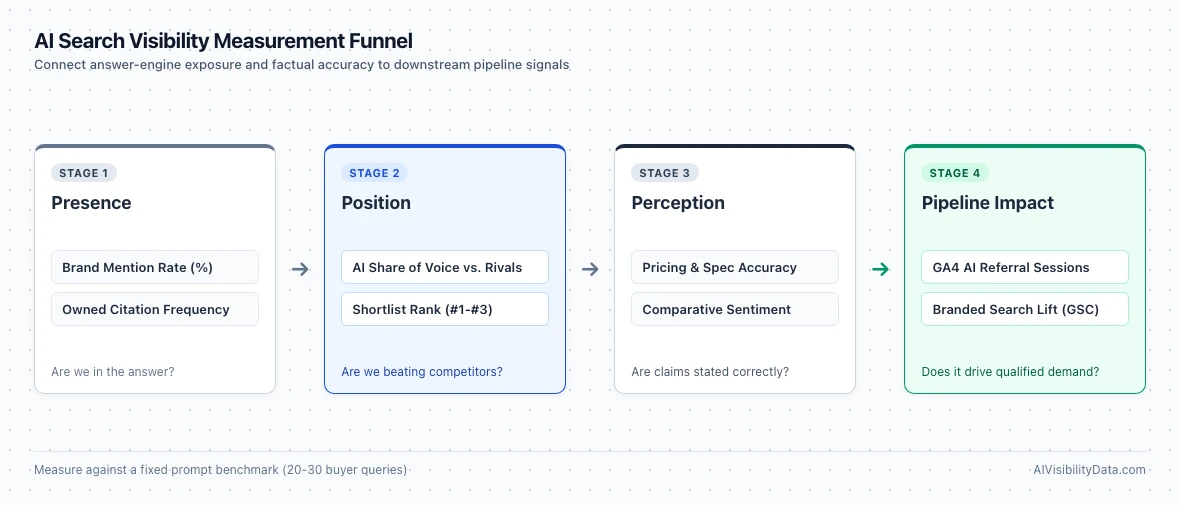
If you only check referral sessions in Google Analytics, a high-impact mention that sends a buyer to search your brand name two days later looks like zero contribution.
2. Six Core AI Visibility KPIs Worth Reporting
Focus executive reporting on metrics that reflect buyer exposure, competitive position, and commercial accuracy rather than raw vanity counts:
| KPI | What It Measures | How to Use It |
|---|---|---|
| Brand Mention Rate | Share of tested prompts where your brand is named | Baseline category discovery on non-branded buyer queries |
| Shortlist Position | Whether you appear #1, #2, #3, or lower in recommendations | Prioritize high-intent prompts where rivals outrank you |
| AI Share of Voice | Your mention share vs. 3 to 5 direct category competitors | Track competitive gains across shared prompt clusters |
| Citation Share | How often your owned URLs are linked as supporting sources | Identify which guides and product docs earn trust |
| Fact & Sentiment Accuracy | Whether pricing, integrations, and fit are stated correctly | Catch outdated specs or hallucinated limitations early |
| AI Referrals + Branded Lift | Sessions from AI hosts plus branded search growth in GSC | Connect answer visibility to qualified pipeline |
You can benchmark mention rate, competitor gaps, and missing citations on any domain using our AI Search Visibility Audit.
3. Pair Your Metrics So Progress Cannot Be Faked
Reporting one isolated metric creates blind spots. High mention counts mean little if the model describes your pricing inaccurately, and rising referral sessions can mask falling share of voice against faster-growing competitors.
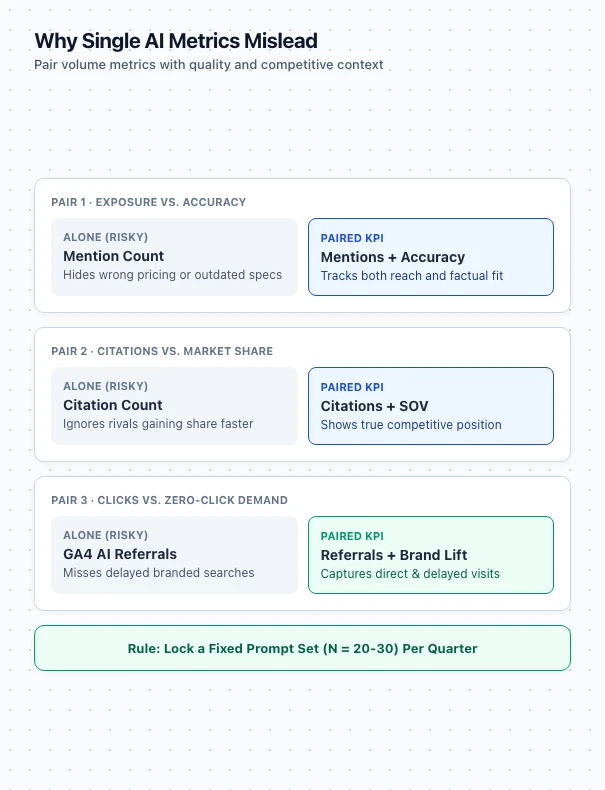
- Pair mention count with fact accuracy so an outdated description does not get counted as a win.
- Pair citation frequency with competitor share of voice so you see whether rivals are gaining mentions faster on the same prompts.
- Pair GA4 AI referral sessions with branded query impressions in Google Search Console to capture delayed zero-click demand.
- Lock your prompt set (for example,
N = 25or30prompts) at the start of each quarter; adding easy prompts mid-quarter inflates visibility without real improvement.
4. Structuring a Monthly AI Visibility Dashboard
Stakeholders need a one-screen view that answers three questions: are we recommended, how are we described, and is that visibility driving pipeline?
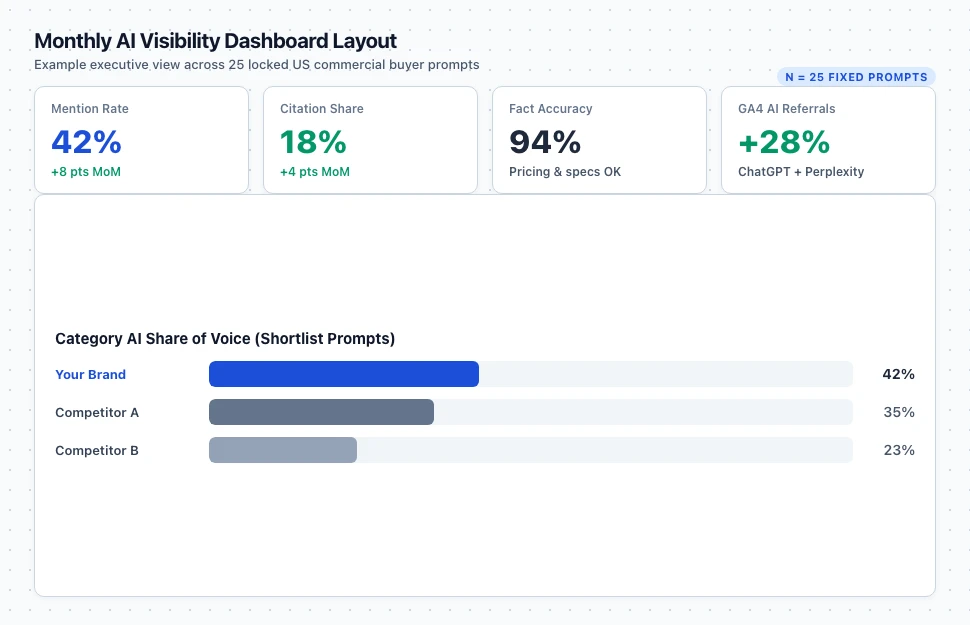
For the traffic layer of this dashboard, configure a dedicated custom channel group as outlined in our guide on tracking AI referral traffic in GA4, and monitor branded query trends inside Google Search Console.
5. Turning Metric Drops Into Concrete Fixes
Every metric drop points to a specific diagnostic action:
- Low mention rate with zero owned citations usually indicates either crawler blocking or missing category/use-case pages. Check bot access with the AI Citation Checker.
- High citations on educational prompts but zero mentions on buying prompts means your commercial comparison and pricing pages lack clear buyer-fit constraints.
- Outdated pricing or wrong feature claims inside AI answers point to stale third-party review profiles or conflicting specs across your site and partner directories.
Frequently asked questions
How often should we measure AI visibility KPIs?
Track AI visibility metrics every 2 to 4 weeks across a fixed prompt set. Daily checks introduce sampling noise because LLM responses vary slightly from run to run.
What is the difference between an AI mention and an AI citation?
A mention occurs when an AI engine names your brand or product in its text response. A citation occurs when the engine links to one of your URLs as a supporting source.
Which AI platforms should US B2B teams prioritize in KPI reporting?
Start with ChatGPT Search, Google AI Overviews, and Perplexity, then add Gemini or Claude if your GA4 referral logs or customer surveys show meaningful buyer usage there.
Next steps & related pages
Want a baseline visibility check for your brand?
Save the CSV checklist above for manual audits, or request a baseline check on your target US buyer prompt while our automated tracking workspace rolls out.