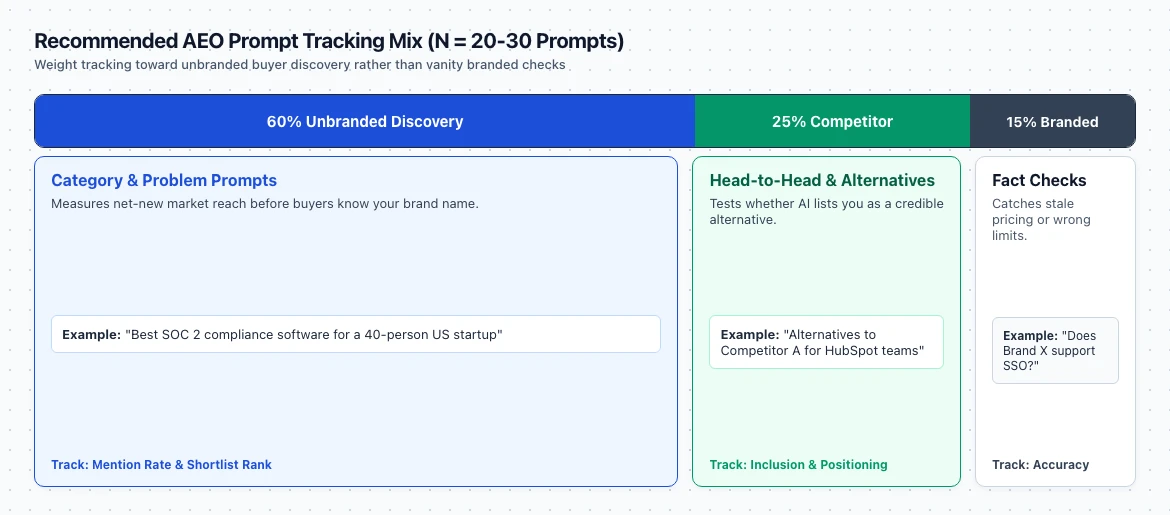
To choose prompts for AEO tracking, build a fixed benchmark of 20 to 30 buyer questions weighted toward unbranded discovery (around 60%), competitor comparisons and alternatives (25%), and branded fact checks (15%), sourced from sales calls, support tickets, and customer objections rather than raw keyword tools alone.
1. Why Short SEO Keywords Make Poor AEO Prompts
Buyers do not talk to ChatGPT or Perplexity the way they type into Google. A traditional keyword like best crm software strips away all context, whereas a real buyer prompt reads like a short project brief containing team size, budget, region, and integration requirements.
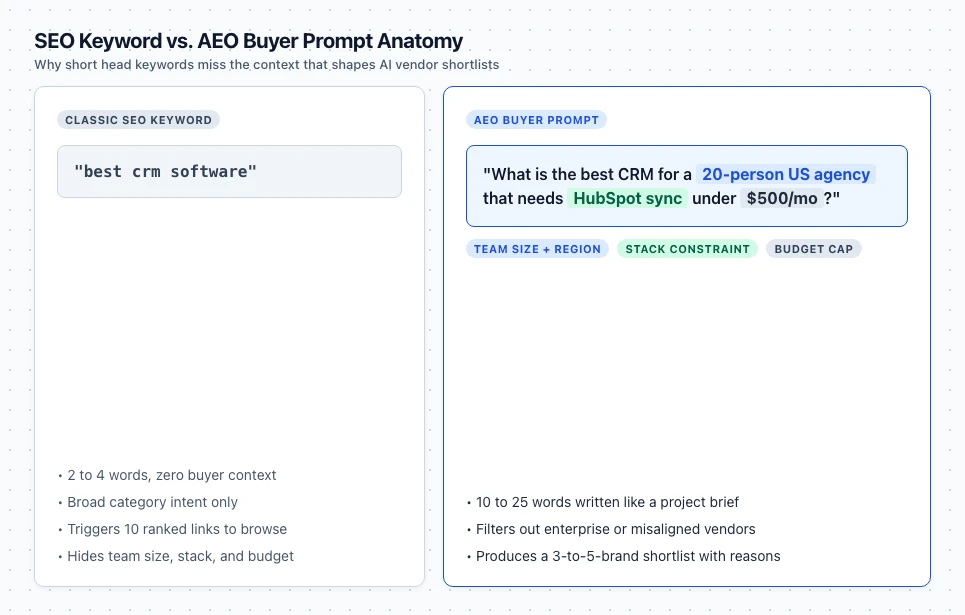
If you only track 2-to-3-word keywords, your visibility report will miss the specific constraint prompts where qualified US buyers actually ask for vendor shortlists.
2. Balance Unbranded, Competitor, and Branded Prompts
Two common mistakes ruin AEO benchmarks: tracking only branded queries (which makes every company look 100% visible) or tracking hundreds of broad informational questions with zero buying intent. Use a weighted portfolio instead:
| Prompt Category | Share of Set | Example Prompt | Primary Metric |
|---|---|---|---|
| Unbranded Discovery | 60% | Best compliance software for a 50-person US fintech | Mention rate & shortlist rank |
| Competitor & Alternatives | 25% | Top alternatives to Competitor A for mid-market teams | Inclusion rate & positioning |
| Branded Accuracy | 15% | Does YourBrand support SOC 2 and Salesforce sync? | Fact accuracy & sentiment |
3. Four Steps to Build Your Tracked Prompt Set
You can assemble a reliable 25-to-30-prompt benchmark in under two hours by pulling directly from customer-facing teams rather than guessing in a spreadsheet.
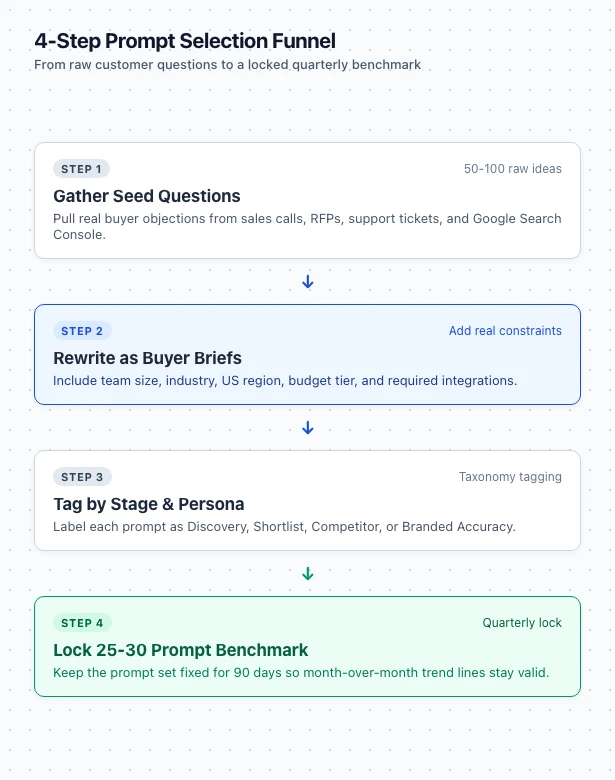
- Gather seed questions from sales discovery calls, RFP requirements, live chat logs, and high-intent long-tail queries in Google Search Console.
- Rewrite each seed topic into a natural conversational brief by adding one or two real buyer constraints (industry, seat count, US compliance, or required integration).
- Tag every prompt by funnel stage (problem research vs. vendor shortlist), persona, and target product line so you can isolate gaps later.
- Lock the initial 20 to 30 prompts for a full quarter before expanding, so trend lines reflect real visibility changes rather than list edits.
4. Testing Prompts Without Distorting Your Baseline
Before locking your benchmark, test each candidate prompt in clean, logged-out US sessions across ChatGPT Search and Perplexity to verify two things: first, that the prompt actually triggers a vendor recommendation or source-backed answer rather than a generic definition; second, that the wording matches how real buyers ask for help.
You can run quick domain checks with our ChatGPT Visibility Tracker or audit broader brand coverage using the AI Search Visibility Audit before committing prompts to your monthly report.
Frequently asked questions
How many prompts should a B2B team track for AEO?
Start with 20 to 30 high-intent prompts per core product line. That sample is large enough to spot competitor patterns across stages without creating noisy reports.
Should we update our tracked prompt list every week?
No. Keep your core benchmark locked for a full quarter so month-over-month comparisons stay valid, and review or rotate prompts once per quarter.
Why include branded prompts if our brand is already named in the question?
Branded prompts are tracked to verify fact accuracy, pricing, integrations, and sentiment rather than mention rate. They alert you when an AI engine repeats outdated or incorrect specs.
Next steps & related pages
Want a baseline visibility check for your brand?
Save the CSV checklist above for manual audits, or request a baseline check on your target US buyer prompt while our automated tracking workspace rolls out.